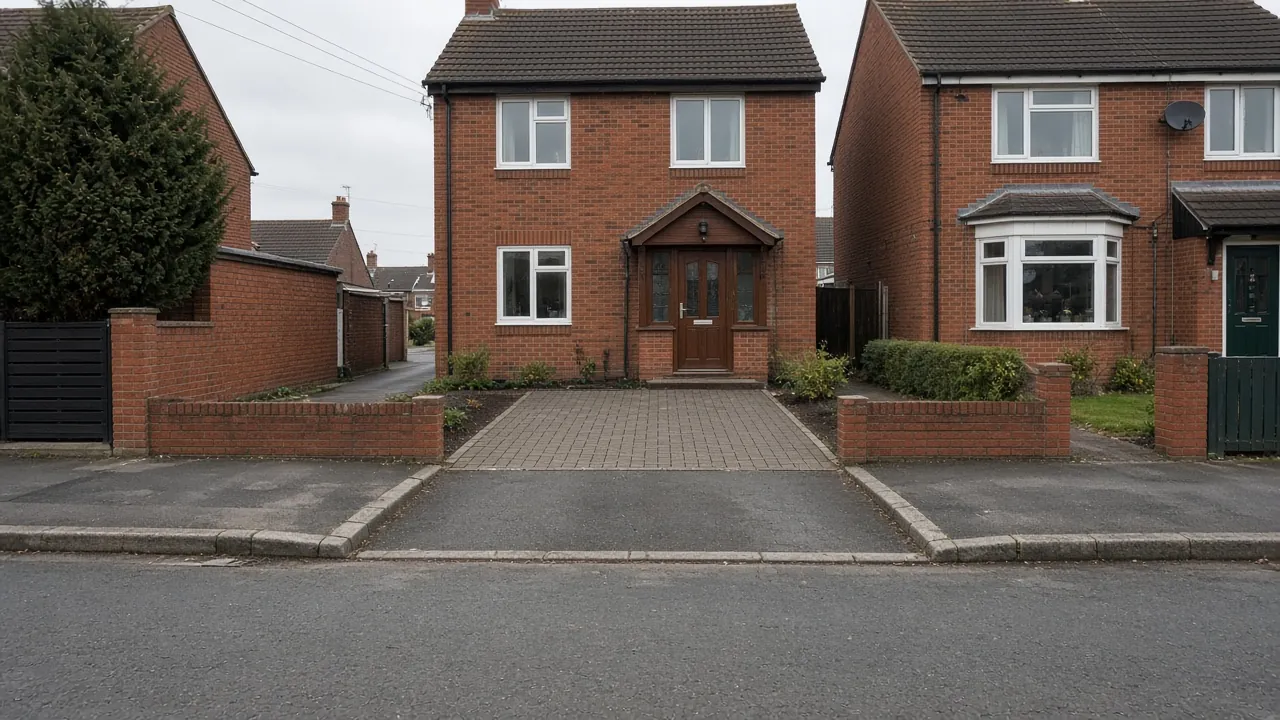
Step 1: Measure and sketch
Measure the depth from the house to the back of the footway, and the width you want. Note any street trees, lamp posts, inspection covers or bus stops near the frontage. These all affect the council's decision.
Step 2: Owner applies
Redcar and Cleveland Borough Council says the dropped kerb application should be completed by the property owner (council page). Tenants need the owner to apply.
Step 3: Site assessment and price
The council looks at visibility, safety, the footway and anything in the way. Crossings are priced on application, so there is no fixed fee to look up.
Step 4: Accept and schedule
If you accept the price, the crossing is built by the council or its approved contractors. Driveway firms that are not approved cannot do this part.
Step 5: Build the drive
With the crossing confirmed, the drive can be built to match its level and width. Planning the two together avoids awkward steps and puddles at the back of the footway.
Budget
| Work | Typical UK cost |
|---|---|
| New crossing | about £1,800 |
| Widening | about £1,100 |
Sources: Checkatrade; MyJobQuote about £2,000.
Mistakes to avoid
- Building the drive before the crossing is approved.
- Accepting a "kerb included" offer from an unapproved firm.
- Leaving ramps in the road, which obstruct the highway.
- Forgetting that classified roads may need planning permission too.
For the full picture, see dropped kerbs in Redcar.
Common questions
How long does it take?
It varies. Apply well before you want the drive built.
Can I appeal a refusal?
Ask the council why it was refused. A different position or width may be acceptable.
Does the crossing belong to me?
No. It remains part of the public highway.
Is planning permission needed?
Not usually on unclassified roads, but it can be on classified roads.