Resin-bound, not resin-bonded
Resin-bound means the stone is mixed with resin and trowelled into a smooth layer, usually 15 to 18mm deep for a drive. Water drains through the tiny gaps between stones. Resin-bonded means stone scattered onto a resin coat, which gives a loose, gravelly finish and is not permeable. For a drive, resin-bound is the one most people want.
Why UV stability matters in Redcar
Redcar's open coastline means a lot of reflected light off sea and sand. Cheaper aromatic resins can darken or yellow over time in sunlight, especially on pale stone blends. Aliphatic (UV-stable) resins cost more but hold their colour. Ask which type is being quoted and get it in writing.
Sand, salt and wind
- Sand. Wind-blown sand settles on resin and can be brushed or blown off. A gentle fall helps rain wash the surface. Avoid sharp internal corners where it piles up.
- Salt. Resin itself copes well with salt spray, but some metal edging does not. Aluminium or stainless edge strips, or block borders, are safer near the seafront.
- Wind. On an exposed day, laying resin needs care, as grit and sand can blow into the wet mix. We watch the forecast before a resin pour.
The base underneath
Resin is only as good as what is underneath it:
| Base | Permeable? | When it is used |
|---|---|---|
| Open-graded (porous) tarmac on a stone sub-base | Yes | New drives, the standard choice |
| Existing sound tarmac | No | Overlays where drainage is handled at the edges |
| Existing concrete | No | Overlays on stable slabs, with crack treatment |
A permeable base keeps you within the front-garden drainage rule. Laying resin over solid tarmac or concrete does not, unless the water runs off into your garden. See block paving if you prefer a surface that is easier to lift and re-lay.
Cost
Checkatrade's April 2026 average is about £120 per m² (driveway cost guide). A 20m² single is about £2,400; a 40m² double about £4,800. UV-stable resin, a new base and edging are where quotes differ. Our resin or block paving guide compares the two side by side.
Questions to ask
- Is the resin aliphatic (UV-stable)?
- What depth and stone size will you lay?
- What base is going down, and is it permeable?
- What edging will you use near the pavement?
- How long is the guarantee, and what does it exclude?
Resin on different Redcar homes
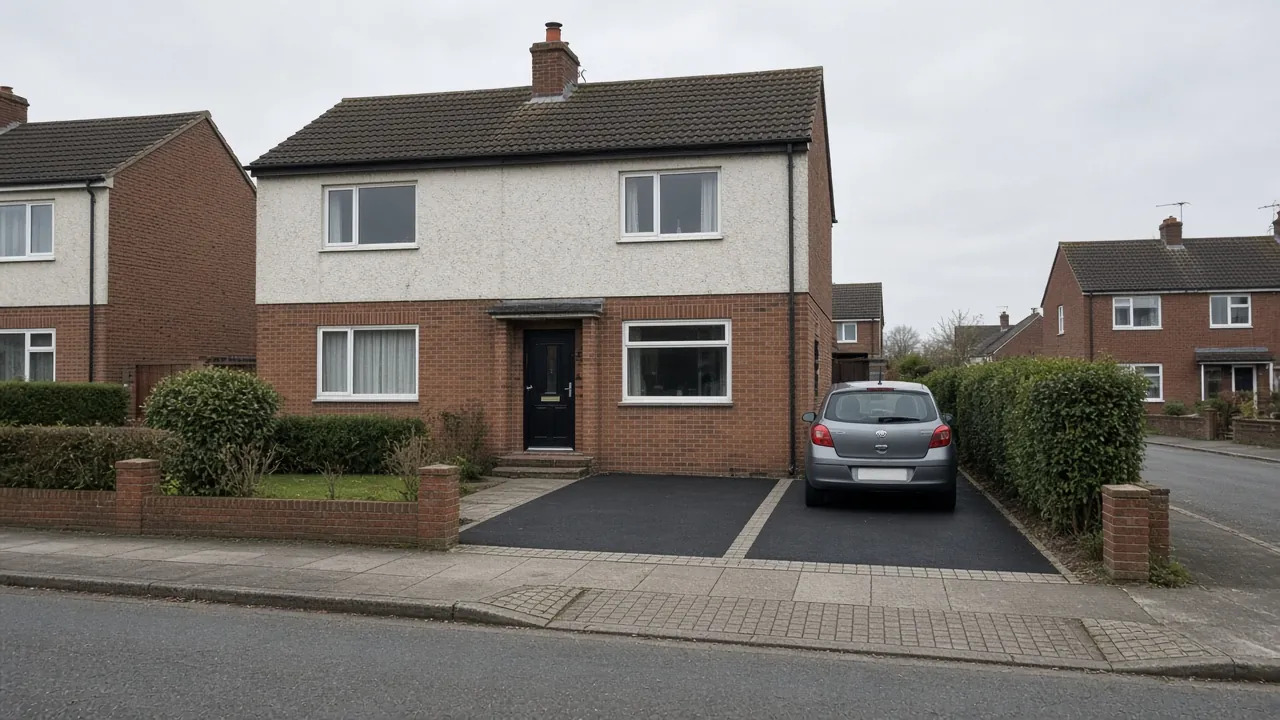
Resin looks particularly smart on rendered and painted houses close to the seafront, where a pale stone blend picks up the colour of the sand. On red-brick semis in West Dyke and Zetland, a warmer bronze or autumn blend sits better. Modern homes in Wheatlands often suit a silver-grey mix that matches window frames and doors. Ask to see a physical sample laid in daylight rather than choosing from a printed chart, because stone colours change once they are bound in resin and seen outdoors.
Common questions
Does resin go yellow by the sea?
Aromatic resins can discolour in strong sunlight. UV-stable aliphatic resins are designed not to.
Will sand damage a resin drive?
Not usually. Brush it off regularly so it does not get ground into the surface by tyres.
Can resin go over my old concrete?
Sometimes, if the concrete is stable and crack-free. It will not be permeable, so drainage must be planned.
How long does resin last?
Typically 15 to 20 years or more when laid on a proper base with a UV-stable resin.
When can I drive on it?
Usually after 24 to 48 hours, depending on temperature.